


Roger Brownsword, who is a graduate of the London School of Economics, took up his first academic appointment in 1968. Currently, he has professorial positions in Law at King’s College London (where he was the founding Director of TELOS) and at Bournemouth University. His many books and articles are known throughout the English-speaking world; and, he also has publications in Chinese, French, German, Italian, and Portuguese. His most recent books are: Law, Technology and Society: Reimagining the Regulatory Environment (2019), Law 3.0: Rules, Regulation and Technology (2020), Rethinking Law, Regulation and Technology (2022), Technology, Governance and Respect for Law: Pictures at an Exhibition (2022) and Law, Regulation and Governance in the Information Society (co-edited with Maurizio Borghi) (2023). His next book, Law’s Imperfect Governance should be published later this year. He was a member of the Law panel for REF2014 in Hong Kong and he is the founding general editor (with Han Somsen) of Law, Innnovation and Technology as well as being on the editorial board of international journals, including the Modern Law Review , the International Journal of Law and Information Technology, and the Journal of Law and the Biosciences.

Clemens Appl is Head of the Center for Intellectual Property, Media and Innovation Law at the University for Continuing Education Krems in Austria. He is a full professor for International, European and Austrian Copyright Law. He has extensive expertise in the fields of intellectual property and technology law, especially with regard to standardization, software, data economy and open innovation. Furthermore he does research in the fields of data protection law, trade secrets and competition law. Clemens Appl authored a number of publications in these fields. He is chairman of FTR – Research Association for Law and Technology (Austria) and board member of the Research Association INFOLAW (Austria). Appl is co-organizer of the Austrian IP-DAY (www.ip-day.at), the Österreichischer IT-Rechtstag (Austrian IT-Law Day) and the Forum Wettbewerbsrecht (Forum Competion law). In addition to his teaching and research activities at the University for Continuing Education Krems and the Vienna University of Economics and Business he is frequently invited to give expert presentations in the fields of intellectual property and competition law. Appl leaded the Erasmus+ Strategic Partnership “Data Driven Management in SME” (www.ddm4sme.eu) and is Academic Director auf the Data Economy Law LL.M. – Program (www.donau-uni.ac.at/del).

Professor Yonathan Arbel is the Rose Professor of Law at the University of Alabama School of Law, as well as the school’s director of the AI Studies Initiative, and a co-director of CLAIR, the Center of Law & AI risk. He is the author of multiple works on AI safety, including Systemic Regulation of AI, Racing to Safety: Tax Policy for AI Safety-by-Design, Silicon Reasonable Person, as well as works on the integration of AI into the legal system, most notably, Generative Interpretation, Smart Readers, and Judicial Economy in the Age of AI.
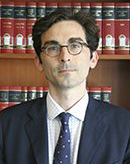
Anatole Boute, PhD in Law (2011, University of Groningen), is a Professor at the Chinese University of Hong Kong, specializing in the fields of energy, environmental and investment law. His research focuses on the legal aspects of the transition of energy systems towards sustainability, with a special interest for energy market reforms in emerging economies.
Anatole Boute graduated in Political Sciences (2003) and Law (2004) from the University of Leuven and holds an advanced master (LLM) in Energy and Environmental Law (2005) from the same university. In 2005, he was called to the Brussels bar where he practiced until 2009 with the Energy Law team of Janson Baugniet. He advised on and was involved in litigation concerning the promotion of renewable energy sources, energy efficiency, greenhouse gas emissions trading, the liberalization of energy markets and nuclear energy.
In January 2011, he defended his PhD on the modernization of the Russian electricity production sector at the University of Groningen under the supervision of Professor Martha Roggenkamp. Based on the results of this research, he advised the United Nations Conference on Trade and Development (World Investment Report 2010), the International Energy Agency (2014 In-Depth Review of the Russian Energy Sector) and the Energy Charter Secretariat (Power Sector Reform in Central Asia). Between 2011 and 2016, he was legal advisor to the International Finance Corporation Russia Renewable Energy Program (The World Bank).
He is the author of Russian Electricity and Energy Investment Law (Leiden/Boston: Brill Nijhoff, 2015) and of articles in several internationally peer reviewed journals, including the Fordham International Law Journal, ICSID Review, Common Market Law Review, Transnational Environmental Law, Journal of Environmental Law, European Law Review, Europe-Asia Studies, Energy Policy. In 2009, he received the Willoughby Prize for his articles published in the Journal of Energy & Natural Resources Law. His research output is partly available at http://papers.ssrn.com/sol3/cf_dev/AbsByAuth.cfm?per_id=878060 and https://scholar.google.com/citations?user=I8YWV8gAAAAJ&hl=fr.
Anatole Boute is the founder of the LLM program in Energy and Environmental Law and is in charge of the program’s coordination.
Anatole Boute is the Principal Investigator of “Greenhouse Gas Emissions Trading in China: Insights from the EU’s Experience” funded by the General Research Fund of Hong Kong (GRF 2016) and of “China’s Shaping of the Eurasian Energy Market: Protecting Chinese Outbound Investments Along the Belt and Road” (GRF 2018). He co-organized the conference on “The Regulation of Energy Investments along the Belt and Road” (2017, CUHK-KAS-ECS).

Xuenan Cao is an Assistant Professor of Cultural Studies and a critical AI scholar. She serves on the Modern Language Association Task Force on AI and research. Her first book Chinese Media Improvisations: Thriving on Deficits is under contract to be published by Stanford University Press in 2026.

Xin Dai is Associate Professor (tenured) and Vice Dean at Peking University Law School and Deputy Director of the Peking University Center for Digital Law. Professor Dai received his LL.B. degrees (in law and in sociology) from Peking University, a J.D. degree from Duke University, and a J.S.D. degree from the University of Chicago. He previously practiced corporate and securities law at Shearman & Sterling’s New York and Hong Kong offices, and taught at Ocean University of China Law School. Xin Dai’s areas of research and teaching interests include legal theories, information and data privacy, comparative law, law and society, economic analysis of law, and AI governance.

Bryan Druzin is Associate Professor of Law and Legal Theory at the Chinese University of Hong Kong, where he teaches jurisprudence and ethics. His research focusses on institutional theory, international law, and global governance. He has held teaching positions at King’s College London, Brunel University London, and as a Visiting Professor at the University of Toronto Faculty of Law. He holds a B.A., LL.B., and LL.M. from the University of British Columbia and a PhD in law from King’s College London. He is former Director of the Faculty’s LLM Programmes and is a Non-resident Senior Fellow at the Centre for International Law, Conflict and Crisis (CILG) at the University of Copenhagen.
Professor Druzin has published widely in journals at leading U.S. law schools, such as Harvard, Cornell, and Columbia, noted peer-reviewed journals, and has contributed to edited volumes from Oxford University Press and Cambridge University Press. His work explores how institutions and governance structures emerge, persist, and collapse—particularly where centralized authority is absent or weak. He has written on a range of topics in this area, from the self-ordering potential of international law to the evolution of social norms, rights, and inequality.
His current research examines the impact of geopolitical fragmentation on international law. His work has also recently extended to the challenges of AI governance, which poses the same foundational question: how to establish effective governance where centralized authority is absent or inadequate.
Dr. Druzin’s scholarship is distinguished by its strong interdisciplinary approach, which draws from rational choice, game theory, and, specifically, the study of network dynamics. A defining feature of his scholarship is his application of network effect theory to explain legal standardization and the stability of international systems. He is the recipient of the CU Research Excellence Award, recognizing his innovative contributions to the study of governance in anarchic systems, and has contributed to media outlets such as the CBC National News, CNN, The Guardian, the National Post, and the South China Morning Post.

Fabian Graf is a Research Associate at the National University of Singapore and the Managing Editor of the Asian Journal of Comparative Law. His research explores the intersections of law and political economy, with particular attention to the role of law in creating, sustaining, and legitimising inequality and broader social harm through the constitution and production of value and values. A key focus in his work is the (transnational) governance of systems that, rather than simply reflecting pre-existing economic or social realities, continuously produce and reconfigure the realities they act upon – such as the international monetary system and AI technologies.
Fabian holds an LL.M. in Public International Law from Utrecht University and a B.A. in International Relations from the University of Erfurt, with extensive additional coursework in law and political economy. Currently, he is pursuing a second LL.M. in Governance and Law in Digital Society at the University of Groningen. His professional background includes government and parliamentary work in Bavaria and Thuringia, as well as experience at the European Union level in Brussels. His academic trajectory included a period of study at the Moscow State Institute of International Relations (MGIMO).

Daria Kim is a senior research fellow at the Max Planck Institute for Competition and Innovation (Munich). She holds an MA from Indiana University of Pennsylvania, an LLM from the Munich Intellectual Property Law Center, and a Dr. iur. from the University of Augsburg. Her research explores the intersection of normativity and technology within innovation governance frameworks, with a current focus on generative and enabling technologies such as genome editing and artificial intelligence.

Benjamin Kraudinger is research associate at the Center for IP, Media, and Innovation Law at the University for Continuing Education Krems. His research focuses on the regulatory framework of artificial intelligence applications – in particular regarding copyright law. He is Secretary General of the INFOLAW Research Association for Information Law and Intellectual Property Law and associate at the law office DORDA in the IP/IT team. Besides his legal education, Benjamin Kraudinger holds a bachelor’s degree in psychology.

Shiri Krebs is a Professor of Law at Deakin University and the Founding Director of the Centre for Law as Protection. She is an Alexander von Humboldt Experienced Researcher at the University of Hamburg, an affiliate scholar at Stanford University Center for International Security and Cooperation (CISAC), and a Visiting Legal Fellow at the Australian Government Department of Foreign Affairs and Trade (DFAT).
Her research on drone warfare and predictive technologies in counterterrorism and armed conflicts is currently funded by the Australian Research Council (ARC) and the Alexander von Humboldt Foundation. Her expertise in these areas has been recognised through invitations to brief governments, militaries, and international organisations, as well as through selective research awards, most recently the David Caron Prize (American Society of International Law, 2021), the ‘Researcher of the Year’ Award (Australian Women in Law Awards, 2022), the Australian Legal Research Awards (finalist, Article/Chapter (ECR), 2022), and the Vice-Chancellor’s Researcher Award for Career Excellence (Deakin, 2022).

Dr. Yangzi Li is a Postdoctoral Fellow at the Centre for Technology, Robotics, Artificial Intelligence & the Law, Faculty of Law, National University of Singapore. She received her Ph.D. and LL.M degrees from the Faculty of Law, at the Chinese University of Hong Kong, and her LL.B degree from the Guangdong University of Foreign Studies. Her research interests include intellectual property, law and information technology, and artificial intelligence policy. Her recent works undertake interdisciplinary research to dissect and gain profound insights into the interplay of IP law and generative AI, and its impact on law reform, policymaking, and AI governance in the creative industries. Her scholarly achievements are featured in well-regarded academic journals, such as International Journal of Law and Information Technology, The Chinese Journal of Comparative Law, Journal of Intellectual Property Law & Practice, Asian Journal of Comparative Law, GRUR International—Journal of European and International IP Law, and European Intellectual Property Review. She has been invited to speak at conferences and seminars in reputable universities, such as Waseda University, the University of Manchester, Chinese University of Hong Kong, City University of Hong Kong, Singapore Management University, Nanjing University, and Beijing University of Science and Technology.

LING, Bin is a Professor and doctoral supervisor at Peking University Law School, where he also serves as the Director of the Center for Law and Social Governance. He holds an LLB and a PhD in Law from Peking University, as well as an LLM and a JSD from Yale Law School. His primary research interests include jurisprudence, law and artificial intelligence, cybersecurity and governance, law and social sciences, and law and public policy. He previously served as a vice Dean and judge at the Fangshan District People’s Court in Beijing. He has also been a visiting scholar at Cornell Law School, Tilburg Law School, the University of Hawaii’s Center for Chinese Studies, Columbia Law School, Yale Law School, and the Yale Pail TsaiChina Center.

Hin-Yan has been working on both AI Governance and on Existential Risk research for the past decade and relishes the opportunity to put this work together in a forum dedicated to the interaction between these areas. He is presently convening courses on Risks of Civilisational Collapse and Artificial Intelligence and Legal Disruption as an Associate Professor at the Faculty of Law, University of Copenhagen. After an LLM at UCL and a PhD from KCL, he was at the EUI and NYU in Florence before moving to Copenhagen.

Dr Eliza Mik has joined the Faculty of Law in January 2021. Prior to that she was researching and teaching at the Singapore Management University from January 2010 until December 2018, and then at Melbourne Law School throughout 2019. Before joining academia, she worked in-house for a number of software and telecommunications companies in Australia, Poland, Malaysia and the United Arab Emirates. She advised on software licensing, technology procurement, digital signatures, and e-commerce regulation. Her PhD focused on the private law aspects of e-commerce and on general problems of transaction automation. From 2014, she has actively researched smart contracts and blockchains, with a special emphasis on the legal prerequisites of their successful implementation in mainstream commerce. Eliza has advised the World Bank and the Monetary Authority of Singapore. At present, she is a member of the UNCITRAL Expert Group for the Digital Economy, a member of the Inclusive Global Legal Innovation Platform on ODR (iGLIP, Hong Kong), a Research Associate at the Tilburg Institute for Law, Society and Technology (TILT, Netherlands) and an Affiliate Researcher with the Centre for AI and Digital Ethics at the University of Melbourne (CAIDE, Australia).

Michael Ramsden serves as the Associate Dean (Research) and Professor in the Faculty of Law, The Chinese University of Hong Kong. He has previously held several other leadership positions within the Faculty of Law, CUHK, including Director of the Research Postgraduate Programme, Assistant Dean (Research), Executive Director of the Centre for Rights & Justice, and Director of the LLB Double Degree Programme.
Prof. Ramsden is a barrister of Lincoln’s Inn and a door tenant at 25 Bedford Row (London). He previously held positions in the International Criminal Court (The Hague) and the Extraordinary Chambers in the Courts of Cambodia. He serves on the advisory boards of the Universal Rights Group (Geneva and New York) and the International Rule of Law Initiative (Ottawa).
Prof. Ramsden has published extensively in the areas of domestic and comparative public law in common law systems, international institutional law and international human rights law. He has held research fellowships at Oxford, Cambridge, Berkeley, Columbia, University College London and the British Institute of International and Comparative Law. His research has been accepted in leading international journals, including the European Journal of International Law, International and Comparative Law Quarterly, International Journal of Constitutional Law, Yale Journal of International Law, Human Rights Law Review, International Journal of Human Rights, Journal of International Criminal Justice, Civil Justice Quarterly, Public Law, and Harvard Negotiation Law Review. His books have been published by Cambridge University Press, Oxford University Press and Edward Elgar Publishing. Prof. Ramsden welcomes Ph.D. and graduate student research proposals in his areas of research.
Prof. Ramsden is committed to experiential learning. Over the years he has coached teams at CUHK LAW that have won numerous major championships and awards in international mooting competitions, including in the Philip C. Jessup International Law Moot, International Criminal Court Moot, Red Cross International Humanitarian Law Moot, and the Law Asia International Law Moot. He also established the CUHK Clinic for Public Interest Advocacy, taking students out of the classroom and into the community to address the legal needs of the disadvantaged. His research on these experiential learning methods has been published in the Journal of Legal Education and The Law Teacher.

Sara Migliorini is an Assistant Professor in the Faculty of Law at the University of Macau. Her research focuses on AI policy, AI-related harms, and the role of AI in courts and alternative dispute resolution. Before joining the University of Macau, she held research and teaching positions at the British Institute of International and Comparative Law (BIICL), the University of London (International Programmes), and the University of Lausanne. She has also led preparatory studies for the European Commission and served as a national expert in an EU-funded initiative on computational private international law. Sara holds a Ph.D. from the European University Institute (EUI), a master’s degree from the University of Paris 1 Panthéon-Sorbonne, and is admitted to the Paris Bar.

Ms. Wang is generally interested in the intersection of Public law and Internet law, especially in the subfields of content moderation and data protection law. Her thesis aims to bring new perspectives for Internet content governance.

Yueming Zhang, policy researcher at Privacy and Data Protection Office, ByteDance. Yueming obtained her PhD degree in law from Ghent University in 2023. Her research focuses on data protection, children’s rights, and cross-border data transfers.