


Kasim Balarabe is a Professor of Law and Associate Dean at O.P. Jindal Global University, India, with over 17 years of experience spanning teaching, research, legal practice, and public service. He specialises in public international law, international humanitarian law, human rights, international criminal law, and the intersection of law and technology. He holds a PhD in Law from Maastricht University and advanced law degrees from Geneva and Amsterdam. Dr Balarabe has authored multiple peer-reviewed articles and books and regularly presents at leading international conferences. He serves as a faculty member with the United Nations Institute for Training and Research and has delivered training globally on refugee protection, human rights, and post-conflict reconstruction. A recipient of numerous teaching and research awards, his current work explores emerging legal challenges posed by artificial intelligence, digital sovereignty, and environmental protection in armed conflict. He is an active member of several international legal associations, including the American Society of International Law and the European Society of International Law.
Cong is the Rudd Family Endowed Chair Professor at Cornell University, where he directs the FinTech Initiative. He is also an Editor at the Management Science, an editorial board member for leading journals, a Research Associate at the NBER and a senior fellow at ABFER, a faculty scientist at IC3, a lead founder of multiple research forums, and is formerly a Kauffman Foundation Junior Faculty Fellow, an UBRI Educator Awardee, a Poets & Quants 40 under 40 World Best Business School Professor, a 2022 Top 10 Quant Professor, and a finance professor at the University of Chicago. A world-leading scholar for AI, digital economics, and financial technology, he pioneered the studies of blockchain economics, tokenomics, AI for Finance, etc. and has won numerous paper prizes and research grants, spoken at hundreds of world-renowned universities, venture funds, investment and trading shops, and central banks. He has also advised leading investment and FinTech and investment firms and various government and regulatory agencies.

Joel Slawotsky is a former law clerk to the Hon. Charles H. Tenney, (U.S.D.J., S.D.N.Y.) and AV peer-review rated attorney at Dentons. In practice, he represented large corporations litigating in U.S. Federal and state courts at both the trial and appellate levels. He has taught, lectured and presented at conferences in Asia, Europe, and both North and South America. Joel has published over 70 journal articles and book chapters. His latest publication is an edited volume titled “Global Power Shifts and International Economic Law” (Elgar, June 2025). Journal article venues include: Asia Pacific Law Review; Chinese Journal of International Law; Hong Kong Law Journal; Journal of World Trade; Law Science; Journal of Corporation Law; Review of Banking and Financial Law; Virginia Law and Business Review; Business Human Rights Journal; Chinese Journal of Comparative Law; Capital Markets Law Journal; and the international law journals of Virginia, Georgetown, Duke, and Fordham.

Yu Yan is a PhD candidate in Finance at the National University of Singapore (NUS) Business School. Her research interests lie in FinTech, entrepreneurship and innovation, and corporate governance, with a focus on the decentralized governance of blockchain-based ventures. Prior to her PhD studies, she received a Bachelor of Economics degree from the Institute for Economic and Social Research at Jinan University.

Dr Stergios Aidinlis is Associate Professor in AI Law at Durham Law School, Durham University (UK). He has been the PI or CO-I of four major research grants at Durham University. His research focuses on AI governance, digital regulation, data protection, and the legal implications of emerging technologies, with particular expertise in AI accountability, digital public infrastructure, and data governance. He holds a DPhil in Socio-Legal Studies from the University of Oxford and has published extensively in leading journals on AI law, GDPR, public sector data sharing, and technology regulation. He is the author of several books, including Big Data for the Public Good (Hart, 2025) and Governing Digital Public Infrastructure (Routledge, 2025). His current work explores AI adoption, regulatory innovation, and the governance challenges posed by agentic and autonomous systems.
Adam Au is the general counsel at a multinational corporation. He also teaches courses on data privacy and artificial intelligence at the University of Hong Kong, blending his interests in law, business and technology. Adam holds an economics degree from Brown University, a law degree from Oxford, and an MBA from MIT.

Alexis is a PhD candidate at CUHK, Faculty of Law. His research interests are related to international intellectual property law, international law and technology, international economic law (investment and trade), as well as related global governance and development issues. His current research focuses mostly on how the geopolitical and geoeconomic triangular rivalry between the EU, China, and the USA affects the development of international law.
The topic of his doctoral dissertation is: “Technology Transfer as a Condition for Market Access or Investment Approval: Comparing Regulatory Developments and Policy Prospects amid Great Power Rivalry”. This dissertation is intended to develop a better understanding of the concept of “forced technology transfer”, which is one subset of the technological rivalry between the EU, China and the USA. The paper that Alexis would like to present is: “Prohibited Technology Transfer Versus Forced Technology Transfer”. This is approximately one chapter of his dissertation.
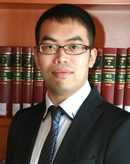
Kevin Cheng is an Associate Professor at The Chinese University of Hong Kong (CUHK) Faculty of Law. Currently, he serves as the Executive Director of the Centre for Comparative and Transnational Law (CCTL). He previously held the role of Assistant Dean (Research).
Prof. Cheng’s research primarily focuses on criminology, criminal justice, and socio-legal studies, with a strong emphasis on empirical work within the Hong Kong context. His published work explores topics such as guilty pleas, sentencing, procedural justice, and public attitudes towards the criminal justice system. He is the author of the book Timing of Guilty Pleas: Lessons from Common Law Jurisdictions (Cambridge University Press), and his articles have appeared in top-tier journals, including the British Journal of Criminology, Journal of Criminal Justice, Law & Social Inquiry, and the Journal of Empirical Legal Studies. His research has been supported by competitive grants from Hong Kong’s Research Grants Council and has been recognized with the university’s Research Excellence Award and Young Researcher Award.
He received his PhD in Criminology from the University of Hong Kong, his JD and PCLL from CUHK, and an Honours Bachelor of Arts in Criminology from the University of Toronto.

Dr. Monica Cheung, CFA, FCPA, CESGA, has over 20 years of corporate finance experience advising clients across Greater China and Asia on capital markets transactions, regulatory compliance, and risk management. She currently serves as a director and responsible officer in Hong Kong, and is an LLM candidate at The University of Hong Kong, expected to graduate in 2026. Monica serves as a board member and chair of the advocacy committee at CFA Society Hong Kong, where she contributes to consultations with the HKSAR Government, HKEX, SFC, and HKMA on market structure, corporate governance, and investors protection. Her research focuses on the regulation of emerging technologies in financial markets. She is fluent in English, Cantonese, Mandarin, and Japanese.

Jessica Chuah is a risk and compliance practitioner with extensive experience across the financial services, fintech, and digital asset sectors. She currently serves as Chief Compliance Officer at a European FX Trading Platform (Undisclosed).
Jessica works closely with regulators, law enforcement agencies, and policymakers to strengthen financial integrity frameworks within digital asset ecosystems. Her expertise includes leveraging technology to develop risk thresholds, red-flag indicators, and investigative workflows aimed at combating money laundering, human trafficking, sanctions evasion, and terrorist financing.
She is particularly interested in the intersection of law, technology, and digital finance, with a focus on distributed ledger technology, AI-driven compliance systems, and emerging legal innovation frameworks. Her work supports the development of secure and trusted infrastructures that enable responsible and ethical innovation across financial institutions and digital platforms.
Jessica holds an LL.B. (Honours) from the University of London. She is a Fellow of the Association of Chartered Certified Accountants (FCCA), an ASEAN CPA, a member of the Malaysian Institute of Accountants (MIA), and a Certified Anti-Money Laundering Specialist (CAMS).
Angela Daly is Full Professor of Law at the University of Newcastle (Australia) and a Visiting Professor at the Universities of Dundee and Warwick (UK). She is a socio-legal scholar of the regulation and governance of data and digital technologies, and works across cybercrime, data protection and privacy, intellectual property, and sector-specific regulation and competition/antitrust. She holds a PhD from the European University Institute (Italy), is a Senior Fellow of Advance HE, and in 2025 was elected as a Fellow of the Academy of Social Sciences (UK).

Bryan Druzin is Associate Professor of Law and Legal Theory at the Chinese University of Hong Kong. His research focuses on institutional theory, international law, and global governance. He has held teaching positions at King’s College London, Brunel University London, and as a Visiting Professor at the University of Toronto Faculty of Law. He holds a B.A., LL.B., and LL.M. from the University of British Columbia and a PhD in Law from King’s College London. He is the Head of the Faculty Student Disciplinary Committee, former Director of the Faculty’s LLM Programmes, and is a Non-resident Senior Fellow at the Centre for International Law, Conflict and Crisis (CILG) at the University of Copenhagen.
Professor Druzin has published widely in journals at leading U.S. law schools, such as Harvard, Cornell, and Columbia, in noted peer-reviewed journals, and has contributed to edited volumes from Oxford University Press and Cambridge University Press. His work explores how institutions and systems of governance emerge, persist, and collapse—particularly where centralized authority is weak or absent. He has written on a range of topics in this area, from the self-ordering potential of international law to the evolution of social norms, rights, and inequality. His current research examines the impact of geopolitical fragmentation on international law. His work has also recently extended to AI governance, which poses the same foundational question: how to establish effective governance where centralized authority is weak.
He is the recipient of the CU Research Excellence Award, recognizing his innovative contributions to the study of governance in anarchic systems, and has contributed to media outlets such as the CBC National News, CNN, The Guardian, the National Post, and the South China Morning Post.

Steven Gallagher teaches courses in equity and trusts, property law, digital technology and law, as well as art, antiquities, cultural heritage, and the law. In Hong Kong, Steven has delivered over 500 continuing professional development programs for solicitors on a wide range of property law topics.
His research interests span equity and the law of trusts, Chinese custom and law, cultural heritage law, and digital technology and law. His academic work includes 10 individually authored book titles, including Protecting Built Heritage in Hong Kong, The Law of Unjust Enrichment in Hong Kong, Equity and Trusts in Hong Kong: Doctrines, Remedies and Institutions, and Digital Technology and Law- the latter being the first comprehensive treatise to systematically address all major aspects of this emerging field.

Prof. Hargreaves’ areas of research are constitutional law, information & privacy law, and legal pedagogy (particularly as it relates to AI). He joined CUHK LAW in 2013 following the completion of his doctorate in law at the University of Toronto, where his thesis considered the privacy and legal implications of new mapping technologies that record public space for commercial purposes. It was supported by a major grant from the Canadian Social Sciences and Humanities Research Council. Prof. Hargreaves also holds a BCL from Oxford University, where his dissertation considered the interaction between proposed privacy standards in APEC and EU laws regulating the outward flow of personal data to non-European states. He also holds a JD from Osgoode Hall Law School, a BA in politics & sociology from McGill University, and a Master’s degree in mental health counseling from HKU.
Prof. Hargreaves is the Faculty’s Associate Dean for External Engagement and previously served as the Director of the LLB programme and as the Assistant Dean for Undergraduate Studies. He has won the Faculty’s Teaching Excellence award and is interested in developing new teaching techniques and tools that leverage AI in the classroom for the benefit of both academics and students. He is an external reviewer for a number of academic journals, a judge for the Undergraduate Awards (law category), an examiner for the overseas PCLL Conversion Examination, and sits on the Board of Advisors of Teach for Hong Kong.
He welcomes discussions with LLB or JD students who are interested in writing independent research papers on topics related to any of his areas of interest; prospective PhD students should, however, follow the established application procedures rather than contacting him directly with a proposal.

Prof. Jyh-An Lee is Professor and the founding Executive Director of the Centre for Legal Innovation and Digital Society (CLINDS) at the Chinese University of Hong Kong Faculty of Law. He has been featured on ABC News, BBC News, Bloomberg News, Financial Times, Fortune, and South China Morning Post as an expert on intellectual property and technology law. Professor’s works have been cited by the US Court of Appeals for the Fifth Circuit, the UK High Court of Justice, the US Copyright Office, the US Patent and Trademark Office, the US International Trade Commission, the U.S.-China Economic and Security Review Commission, and the WTO dispute-settlement panel.

Miss Ruoxi Li, currently pursuing a PhD degree in AI Governance at the Division of Emerging Interdisciplinary Areas, the Hong Kong University of Science and Technology and the Hong Kong Generative AI Research and Development Center. Her research direction is legal AI, AI alignment, Technopolitics, Science and Technology Studies. Her papers have been accepted by the UCLA Journal of Law and Technology and Transnational Law & Contemporary Problems.

Wenlong Li is a Research Professor at Zhejiang University, specialising in the transnational regulation of artificial intelligence. He is a member of UNESCO’s AI Ethics Without Borders, Scientific Expert for the International Panel on the Information Environment, and Research Affiliate at the Edinburgh Centre for Data, Culture & Society. Wenlong currently serves as Associate Editor of International Data Privacy Law, Editor of the Future Law book series at Edinburgh University Press, and Country Correspondent (China) for the Journal of AI Law and Regulation. He is also organising a special issue on AI regulation in Asia as Executive Guest Editor for Computer Law & Security Review. Before joining ZJU, Wenlong built an academic career across several British universities, including the University of Edinburgh, the University of Birmingham, and Aston University. Alongside his academic work, he also held full-time research and governance roles at leading companies such as TikTok, Alibaba, and Tencent.

Dr. Siyi Lin is an Assistant Professor at The Chinese University of Hong Kong, Faculty of Law. Dr. Lin’s research interests include unjust enrichment, trust law, contract law and property law.
Dr. Lin completed her PhD at CUHK LAW where her doctoral thesis was awarded the Young Scholars Thesis Award for best PhD thesis. Prior to her PhD, Dr. Lin obtained her LLM from CUHK LAW and her LLB from China University of Political Science and Law.
Dr. Lin is qualified as a lawyer in mainland China. Her previous professional experience includes work at King & Wood Mallesons and Fangda Partners in Hong Kong and Shenzhen offices.

Pui Ying (Michelle) LIU is a PhD Candidate Private Law at Radboud University Nijmegen (The Netherlands). The topic of the thesis is Digital Vulnerability in European and Chinese Private Law. Her research aims to elucidate a new perception of vulnerability, viz digital vulnerability. The ongoing digitalisation of today’s society calls new power imbalances into being that are unprecedented. Today’s digitalisation does not only render those who are traditionally understood as weak (e.g. minors), vulnerable, but it pushes everyone in a vulnerable position. These new power imbalances manifest themselves in many ways, for example through social media addiction. Whilst most efforts to protect individuals from social media addiction are aimed at minors, the digital architecture of platforms renders everyone vulnerable. This is where the notion of “digital vulnerability” comes at play.
Her articles have been published in European Review of Private Law and in Journal of European Consumer and Market Law.

Sandra Marco Colino is an Associate Professor. She specialises in competition law, merger control, the digital economy, technology law, EU law, telecommunications, and law & economics. She joined the Faculty in 2010 and is the Deputy Programme Director of the Master of Laws (LLM) in International Economic Law. She currently serves as Non-Governmental Advisor (NGA) to the International Competition Network, and sits on the Academic Board of the law firm Dictum and on the Scientific Committee of the European University Institute’s Centre for a Digital Society. She previously directed the Centre for Financial Regulation and Economic Development (CFRED), and the Summer Schools on EU Competition Law at the College of Europe in Bruges (Belgium). Prior to moving to Hong Kong, she was a Lecturer at the University of Glasgow (UK).
Prof. Marco Colino holds a PhD from the European University Institute in Florence (Italy) and an LLM from the University Carlos III of Madrid (Spain). A qualified lawyer in Spain and a member of the Madrid Bar, she has worked as stagiaire at the European Commission (Belgium) and has trained in various Madrid law firms. She has been a Visiting Scholar at the University of Wisconsin – Madison (USA), the University of California – Berkeley (USA), the University of Melbourne (Australia), the University of Birmingham (UK) and the University of Glasgow. She is a member of the Academic Society for Competition Law (ASCOLA), a Fellow of the Transatlantic Technology Law Forum of Stanford University (USA), and an Associate Researcher at the Royal University Institute for European Studies in Madrid. In 2010 she founded the Communications Policy and Regulation Scholars Forum (CPRSF). She is the Hong Kong news correspondent to the European Competition Law Review, and an analyst for Agenda Pública.
Her award-winning research has been extensively published in leading peer-reviewed journals and US law reviews. She is the author of various books, including the textbook Competition Law of the EU and UK (Oxford University Press), now in its 8th edition, and the monograph Vertical Agreements and Competition Law (Hart). She is the Principal Investigator of three major research projects funded by Hong Kong’s Research Grants Council, and a member of two EU-funded Jean Monnet research networks. She was a founding member and the Deputy Director of the European Union Academic Programme in Hong Kong, a collaboration between four of the city’s leading universities co-funded by the European Union.
Prof. Marco Colino’s honours and recognitions include three Antitrust Writing Awards (2025 and 2018), the Academic Excellence Award (Global Competition Review, 2020), the Research Excellence Award (CUHK, 2025), the Young Researcher Award (CUHK, 2021), the Award for High-Impact in Legal Scholarship (CUHK, 2020), the award for best paper and presentation (Georgetown University’s Center for German and European Studies, 2004), and the Teaching Excellence Award (CUHK, 2017).

Dr. Eliza Mik has joined the CUHK Faculty of Law in January 2021. Before academia, she worked in-house for a number of software and telecommunications companies in Australia, Poland, Malaysia and the United Arab Emirates. She advised on software licensing, technology procurement and e-commerce regulation. Dating back to her PhD thesis, Eliza’s interests have always centered on the private law aspects of e-commerce and on general problems of transaction automation, particularly with the use of technologies commonly referred to as Artificial Intelligence. Eliza is also one of the most cited authors on the topic of “smart contracts.” In recent years, as part of a research grant, her academic explorations also include the use of large language models in the legal profession. At present, she is a member of the Inclusive Global Legal Innovation Platform on ODR (iGLIP, Hong Kong), a Research Associate at the Tilburg Institute for Law, Society and Technology (TILT, Netherlands) and an Affiliate Researcher with the Centre for AI and Digital Ethics at the University of Melbourne (CAIDE, Australia).

Nikolin Muçaj is an Associate at Halimi Ahmetaj Law and Tax in Albania, where he practises in the areas of international and commercial law. He holds an LL.M. in EU Business Law and a Master of Science in Law, both from the University of Tirana. He is also a Vis Moot alumnus, having competed in the 2025 Willem C. Vis International Commercial Arbitration Moot.
His research focuses on international arbitration, EU law, and cross-border litigation, with particular emphasis on complex legal challenges. His work explores issues such as cross-jurisdictional evidentiary matters under the New York Convention, the role of non-signatories in international arbitration, and the enforceability of intra-EU investor-state arbitral awards.
His work has been published in academic journals and institutional newsletters, most notably in The Ravenna Summer School Newsletter of the University of Bologna. He has also co-authored practitioner-oriented publications on developments in criminal and commercial law.

Dr Rebecca Owens is a Postdoctoral Research Associate in AI Law at Durham Law School, Durham University (UK). As part of the Horizon Europe ENCIRCLE project, she investigates the regulatory, societal, and ethical implications of agentic AI systems. Dr Owens previously held research roles at Newcastle University (UK) and served as an Associate Fellow of the Research Institute of Socio-Technical Cybersecurity. Her interdisciplinary work focuses on AI governance, cybersecurity, and digital platform regulation, with a specialisation in socio-technical approaches to AI accountability and complex online harms. By bridging socio-legal and computational methodologies, she has published across leading law and computer science venues. She completed her doctoral studies at the University of Liverpool (UK), where she also obtained her LLM and LLB.

Ms. Pan is interested in technology law and AI governance. With her thesis, she hopes to examine how AI companions erode users’ cognitive liberty and to explore why existing legal frameworks fall short in addressing this harm and how they should be reformed.

Maybell Romero is the McGlinchey Stafford Associate Professor of Law and Associate Dean for Faculty Research and Programs at Tulane Law School. A leading expert on criminal law, prosecutorial ethics, and rural criminal legal systems, she teaches criminal law, criminal adjudication, legal ethics, and children and the law.
Her scholarship appears in the Virginia Law Review, the Georgetown Law Journal, the Washington University Law Review, the Journal of Criminal Law and Criminology, and the American Criminal Law Review, among others. Much of her work critiques the criminal legal system through a public choice theory lens; more recently, she employs autoethnographic methods and cultural criticism to write about rape and sexual assault law, drawing on her own experience of assault and trafficking.

Shivam Saran is a researcher interested in the intersection of artificial intelligence, law, and finance. Currently, he is an Investigative Analyst in the Manhattan District Attorney’s Major Economic Crimes Bureau, where he deals in large-scale financial fraud investigations. Previously, he worked as a Research Specialist at the University of Chicago Law School with Professor Eric Posner. He graduated summa cum laude from Emory University with a B.S. in Quantitative Sciences and a minor in Physics.

Ernest is an English Barrister who practised at the Bar in London. Ernest has over fifteen years of experience in Higher Education and has taught in China, London, Malaysia and Singapore. He has received two Lord Dearing Awards (Excellence in Teaching 2017 and Excellence in Educational Leadership 2020) from the University of Nottingham and the Zhejiang Municipal Excellent Teacher Award (2018). Ernest is a Senior Fellow of the Higher Education Academy, United Kingdom. He is an examiner for several institutions, including the University of London. He has extensive experience in university administration and held the title of ‘Campus Senior Tutor’ at the University of Nottingham, where he was responsible for student engagement, welfare and experience. He has experience in instructing management of organisations in legal training as part of executive education programmes. Ernest is currently completing his PhD at Hong Kong University in Artificial Intelligence, and Intellectual Property Law, supervised by Professor Yahong LI.
Dr Neerav Srivastava is a Lecturer at RMIT School of Law, where he specialises in technology law, artificial intelligence, and digital platform law. He holds a PhD from Monash University and an LLM (Hons) from the University of Melbourne. Neerav has published widely in peer-reviewed journals and has been cited in judgments. He received the PCLL Scholarship Prize at City University of Hong Kong and was awarded the Monash University HP Lee Law Student Publication Prize twice. His work on AI liability, psychbot negligence, and platform regulation has attracted media attention, including coverage by the ABC and the Law Society Journal. Neerav maintains strong ties to Hong Kong, serving with Prof Normann Witzleb, as General Editors of Tort Law and Practice in Hong Kong(Sweet & Maxwell, 4th ed, 2025) and other contributing to other leading local legal works.

Bohui Su is a Ph.D. in Law candidate at The Chinese University of Hong Kong. Bohui holds a Juris Master from Renmin University of China and a Bachelor of Economics from Wuhan University of Technology. Research interests focus heavily on personal data protection and torts. Bohui has authored articles in Chinese peer-reviewed journals, while also presenting at various international legal conferences.

Mr. SUN Qilong is a Ph.D. candidate in law at The Chinese University of Hong Kong (CUHK). His research interests lie in antitrust law, digital platform regulation, and AI governance. He holds an LL.B. and an LL.M. from China University of Political Science and Law (CUPL). His current work explores the regulation of platform blocking practices in China, with a comparative focus on the EU’s gatekeeper model under the Digital Markets Act. At the 6th Machine Lawyering Conference, he will present his paper entitled “Regulating Platform Blocking in China: Comparing the Attention Market Approach with the EU’s Gatekeeper Model.”

Xuan is a PhD student at the Faculty of Law, The Chinese University of Hong Kong (CUHK). She obtained her bachelor’s degree from the China University of Political Science and Law and her master’s degree from Peking University. Her research interests include AI regulation, particularly disclosure obligations for AI-generated content (AIGC) in the field of intellectual property. Xuan has co-authored two forthcoming papers with Professor Jyh-An Lee, “The DeepSeek Law” and “Vocal Identity Under Siege by AI Voice Cloning Technologies.”

Chimdessa Fekadu Tsega is a postdoctoral fellow at the Faculty of Law of The Chinese University of Hong Kong (CUHK), focusing on the intersection of international trade and intellectual property law. Prior to joining CUHK LAW, he held teaching and research positions across multiple jurisdictions, including Ethiopia, Switzerland, Hungary, Singapore, and Germany. In addition to IP and trade, his research examines regional integration law, the African Continental Free Trade Area (AfCFTA), and China-Africa relations. He holds a PhD in Laws from CUHK, as well as master’s degrees from the University of Geneva (ADH) and the National University of Singapore (NUS).

David is a Postdoctoral Fellow at Tokyo College, University of Tokyo. His research focuses on interdisciplinary approaches to intellectual property, exploring the theoretical and social dimensions of international patent law. He has published comparative legal analysis on specialised courts, the convergence of language around patent law and innovation in government, and national autonomy under the TRIPS Agreement. Currently, he is working on a new project that is focused on specialised courts in the GCC.

Roman Uliasz is a law professor and Head of the Chair of Civil and Commercial Law at the Faculty of Law and Administration, University of Rzeszów, Poland. He is also a practising attorney-at-law and a sworn translator of English and Polish. His academic research focuses on private law, comparative law, arbitration law, legal linguistics, and the use of artificial intelligence in legal interpretation and judicial reasoning. He has published on the interaction between language, cognition, and law, including topics related to legal transplants, multilingual legal interpretation, and cultural models in private law. He is also involved in international academic collaborations concerning law, language, and artificial intelligence. Among other roles, he serves as a section co-editor and contributing author for The International Handbook of Legal Language and Communication: From Text to Semiotics, to be published by Springer Nature.
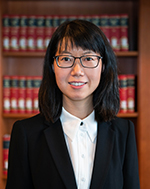
Jingyi Wang is an Assistant Professor at the Faculty of Law, the Chinese University of Hong Kong (CUHK). Jingyi’s research interests include tax law, fiscal policy, corporate governance and social-legal studies. Her recent work examines tax law reform in China, the taxation of cryptocurrencies, Hong Kong tax policies and law enforcement in China. Her scholarly works have appeared or are forthcoming in prominent academic journals such as Florida Tax Review, British Tax Review, Australia Tax Forum, Journal of Corporate Law Studies, Journal of International Economic Law, Singapore Journal of Legal Studies, China Quarterly, British Journal of Criminology, Journal of Criminology, Hong Kong Law Journal and Asia Pacific Law Review.
Jingyi obtained her PhD and LLM from King’s College London and her LLB from the East China University of Political Science and Law. Before joining CUHK, Jingyi was an Assistant Professor at the School of Transnational Law, Peking University, and a post-doctoral fellow in the Faculty of Law, the University of Hong Kong.

Normann Witzleb joined CUHK Law in 2021. He was previously an Associate Professor and Associate Dean (International and Engagement) in the Faculty of Law of Monash University Australia.
His research focus is on privacy and data protection law, the law of torts and remedies, as well as comparative law. His recent book publications include Tort Law and Practice in Hong Kong, 4th edn (Sweet & Maxwell, 2025), with K Bokhary & N Srivastava (eds); Contract Law in Changing Times: Asian Perspectives on Pacta Sunt Servanda (Routledge, 2023), edited; Big Data, Political Campaigning and the Law: Democracy and Privacy in the Age of Micro-Targeting (Routledge, 2020), with M Paterson & J Richardson (eds) and Remedies: Commentary and Materials, 7th ed (Thomson Reuters, 2020), with E Bant, S Degeling & K Barker. Some of his recent research is available from SSRN and ResearchGate.
Prof Witzleb maintains an adjunct position at Monash Law, where he teaches an LLM course on Privacy and Surveillance in the age of AI. He is admitted to practice in the Australian Capital Territory, a barrister of the High Court of Australia and a fully qualified German lawyer. In 2019 and 2020, he consulted with the Australian Attorney-General’s Department and the Office of the Australian Information Commissioner on law reform projects in privacy and information law.
Prof Witzleb is an experienced PhD supervisor, who welcomes expressions of interest from higher degree research students in his areas of expertise.

Kwanghyuk (David) Yoo is Assistant Professor of Business Law at Kean University’s College of Business and Public Management. His research focuses on antitrust law, digital markets, law and economics, and platform governance. His current work examines how competition law can address non-price harms in digital platform markets, including harms to innovation, interoperability, and long-term platform ecosystem resilience. He develops the concept of digital sustainability as a framework for evaluating dynamic efficiency and market power in the digital economy.

Prof. Zeng works on Corporate Law and Law and Finance in China. His independently authored works have appeared or will appear in highly selective peer-reviewed journals such as the Journal of Law and Economics, American Journal of Comparative Law, American Business Law Journal, American Bankruptcy Law Journal, International Review of Law and Economics, European Business Organization Law Review, Journal of Environmental Law, Journal of Corporate Law Studies, and Hong Kong Law Journal. His doctoral dissertation, State Ownership as a Substitute for Costly Regulation, was supported by the Oscar M. Reubhausen Fund at Yale Law School and has been published by Cambridge University Press. He has also conducted research on Chinese corporate law supported by the Early Career Scheme and General Research Fund of the Research Grant Council of Hong Kong, China.